
GAN API Lab.
Ten practical guides to the decisions behind GAN APIs. Explore architectures, evaluate the evidence, and keep model capabilities in context.
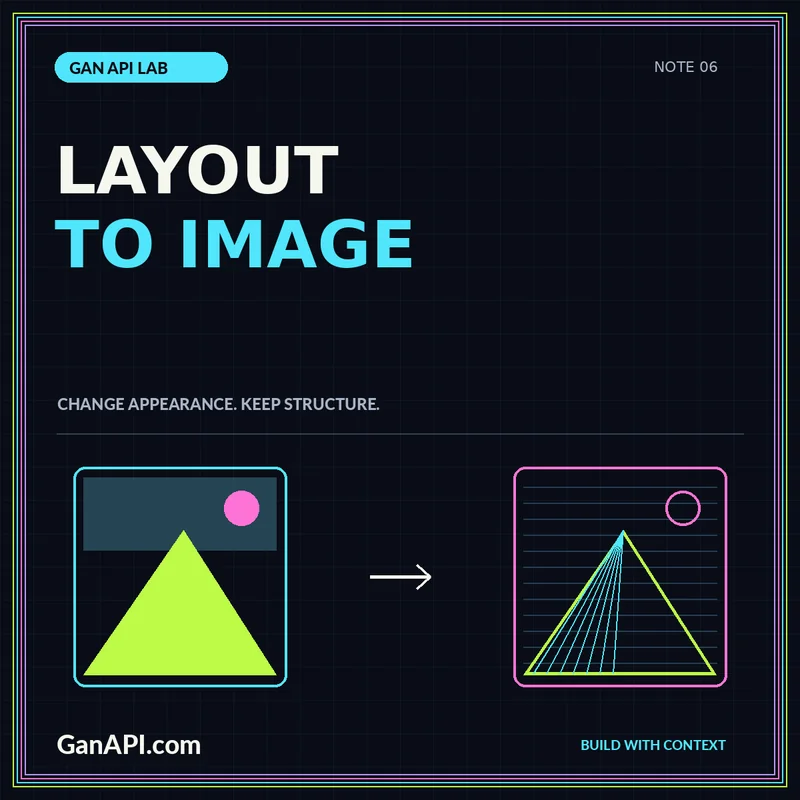
Image Translation and Semantic Layouts: Preserve What Matters
Compare image-to-image and layout-conditioned workflows, with explicit class maps, alignment rules, and preservation tests.
Read the guide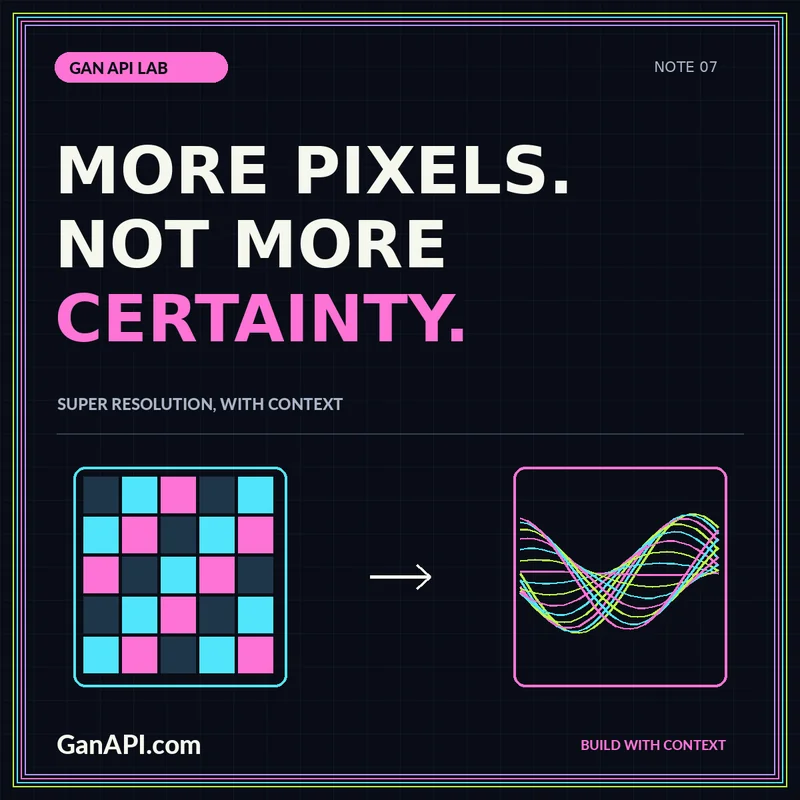
Super Resolution: Better-Looking Is Not Always More Faithful
Evaluate upscaling with honest baselines, realistic inputs, artifact review, and a clear distinction between inferred and observed detail.
Read the guide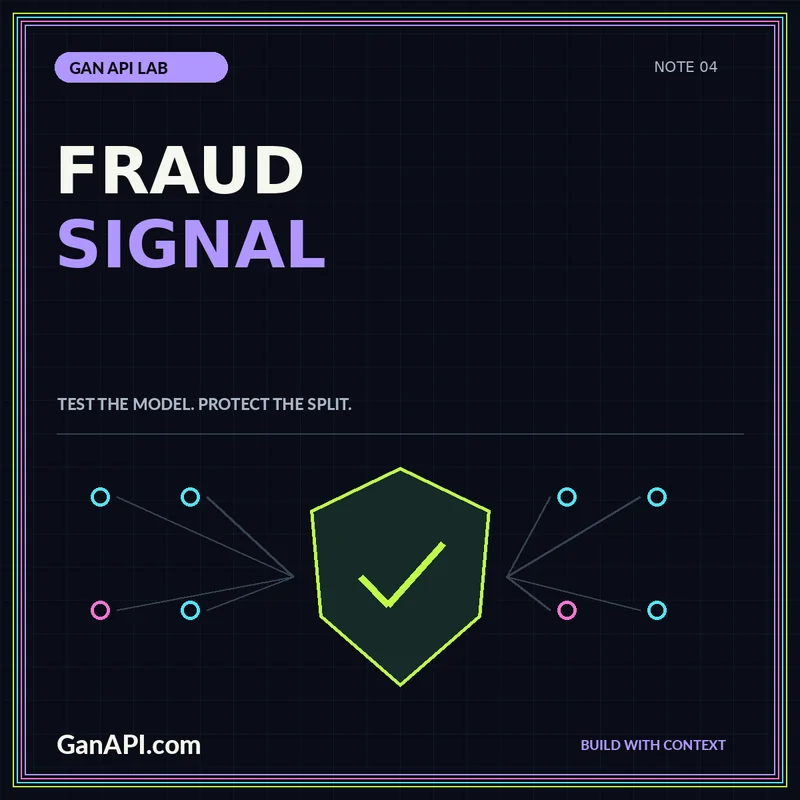
GANs for Fraud Detection: An Experiment Without Data Leakage
Design a defensive augmentation experiment with time-aware splits, fair baselines, and thresholds tied to a real review workflow.
Read the guide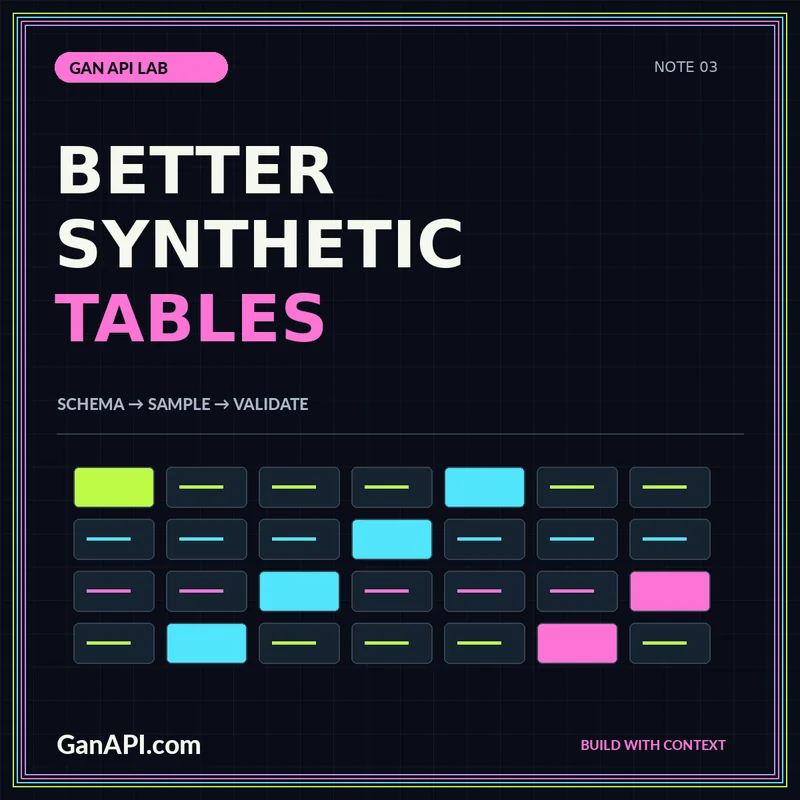
Evaluating CTGAN: More Than a Realistic-Looking Table
Check validity, relationships, downstream utility, and disclosure risk before accepting a synthetic dataset.
Read the guide
Synthetic Healthcare Data: Validate Utility and Privacy Separately
A purpose-limited workflow for synthetic patient records, covering schema design, utility testing, privacy review, and release decisions.
Read the guide
Style Transfer APIs: Change the Look, Preserve the Brief
Build a domain-based stylization workflow with supported controls, explicit preservation rules, and useful creative review.
Read the guide
Text-to-Speech GAN APIs: Where the Vocoder Fits
Connect text processing, acoustic modeling, and waveform synthesis without confusing a GAN vocoder with a complete speech system.
Read the guide
Image Generation APIs: Seeds, Latent Controls, and Reproducibility
Expose controls that match the checkpoint, preserve artifact provenance, and evaluate diversity alongside visual quality.
Read the guide
Video Prediction GANs: Evaluate Possible Futures, Not Certainty
Define context, prediction horizons, temporal baselines, and sampling rules for a more inspectable video prediction workflow.
Read the guide
Designing a GAN API: From Checkpoint to Reliable Interface
Turn a GAN checkpoint into a clear, versioned interface with useful job states, output provenance, and realistic evaluation.
Read the guideFollow an engineering question.
Connect the articles through shared decisions about inputs, evaluation, privacy, serving, and provenance.