
Computer vision
Visual plausibility is only the beginning. Explore image generation, translation, upscaling, stylization, and video continuations. This collection focuses on the distinction between appearance, preserved structure, temporal consistency, and the factual interpretation of generated detail.
Pick a workflow based on what the output must do. Define which input properties may change, which must remain intact, and how the result will be reviewed. Keep original and generated media distinguishable, and do not assume that one successful visual demonstration establishes every related capability.
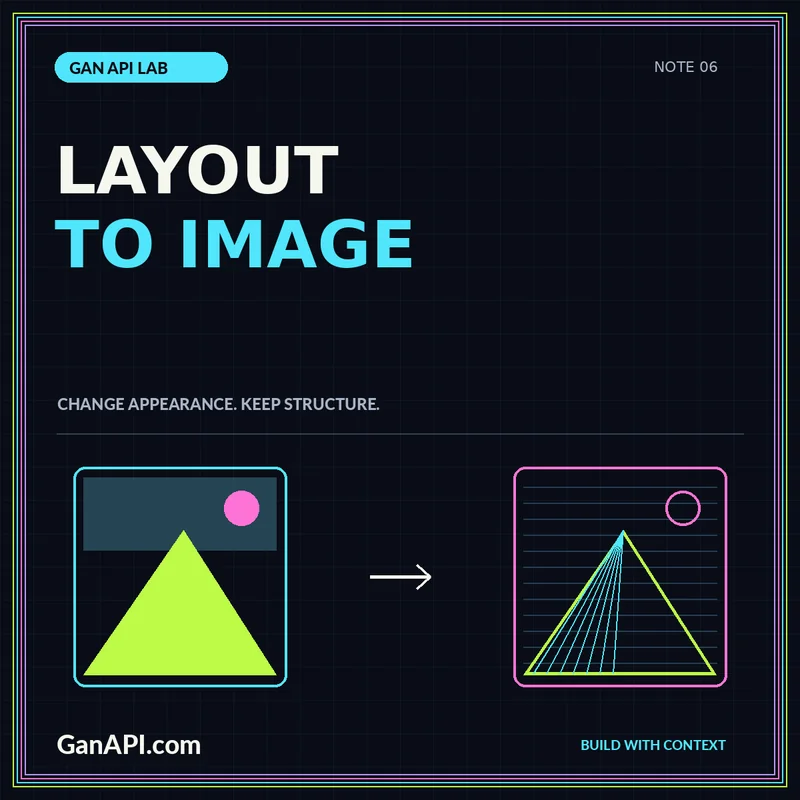
Image Translation and Semantic Layouts: Preserve What Matters
Compare image-to-image and layout-conditioned workflows, with explicit class maps, alignment rules, and preservation tests.
Read the guide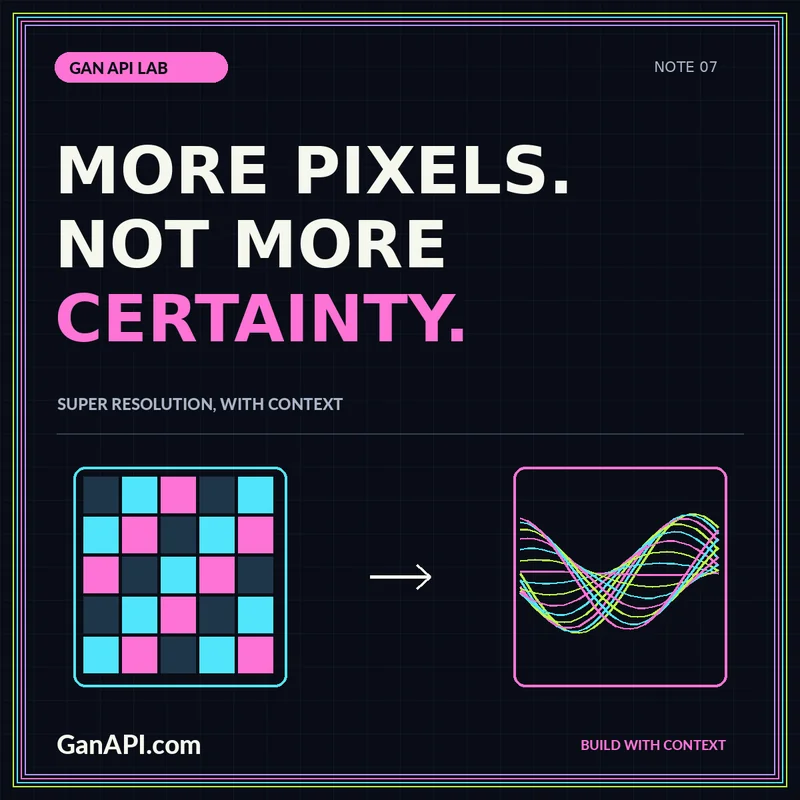
Super Resolution: Better-Looking Is Not Always More Faithful
Evaluate upscaling with honest baselines, realistic inputs, artifact review, and a clear distinction between inferred and observed detail.
Read the guide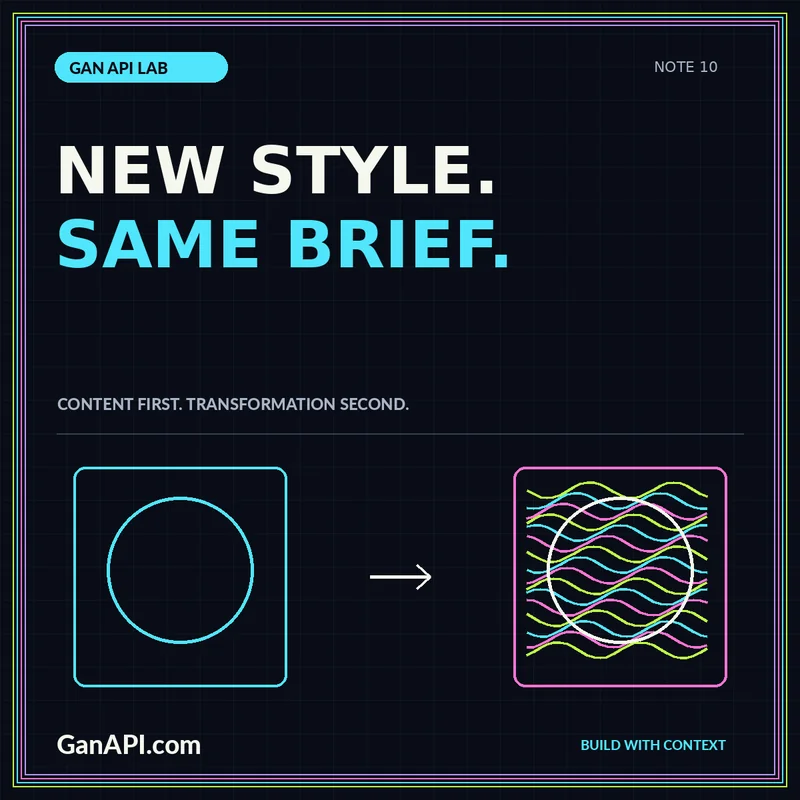
Style Transfer APIs: Change the Look, Preserve the Brief
Build a domain-based stylization workflow with supported controls, explicit preservation rules, and useful creative review.
Read the guide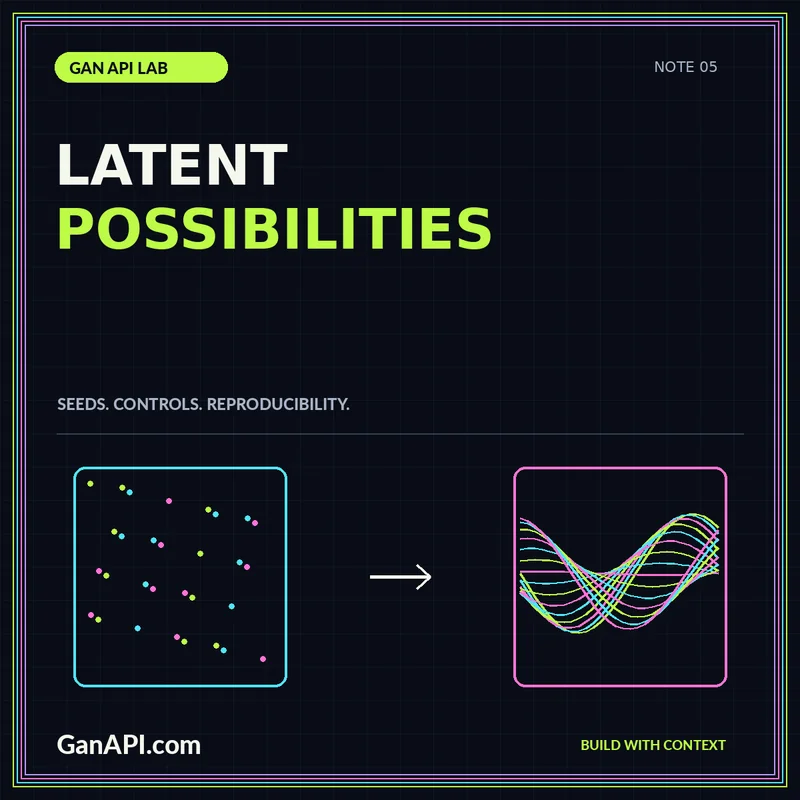
Image Generation APIs: Seeds, Latent Controls, and Reproducibility
Expose controls that match the checkpoint, preserve artifact provenance, and evaluate diversity alongside visual quality.
Read the guide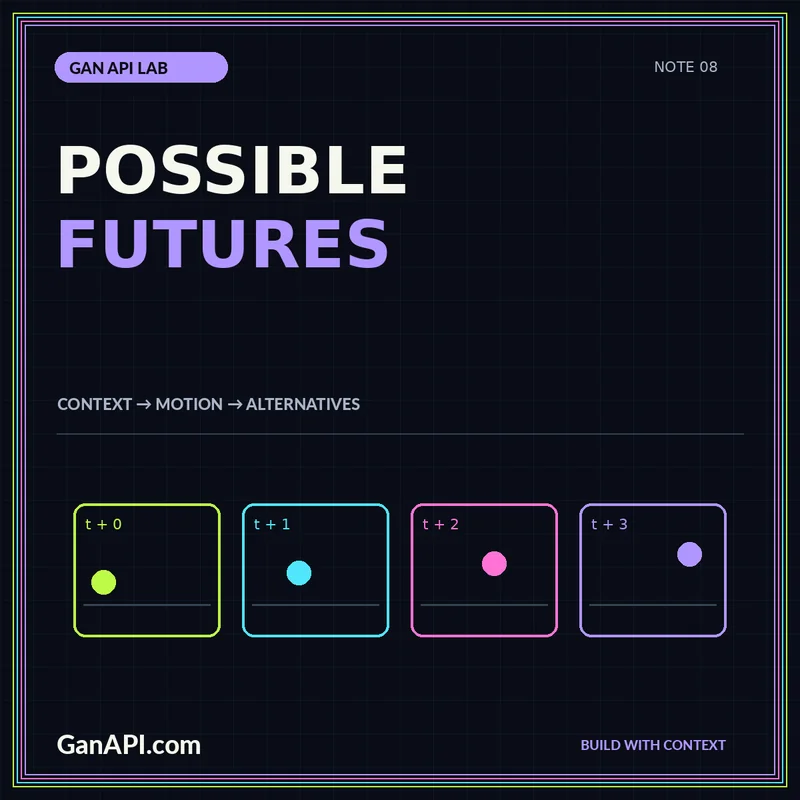
Video Prediction GANs: Evaluate Possible Futures, Not Certainty
Define context, prediction horizons, temporal baselines, and sampling rules for a more inspectable video prediction workflow.
Read the guide